
Free written scope consultation - allowances, timeline, and change-order rules on paper before a single trade is scheduled
 Before
 After
After Before
 After
After Before
 After
AfterJames Hardie Bathroom Remodeling: The West Palm Beach Owner’s Guide
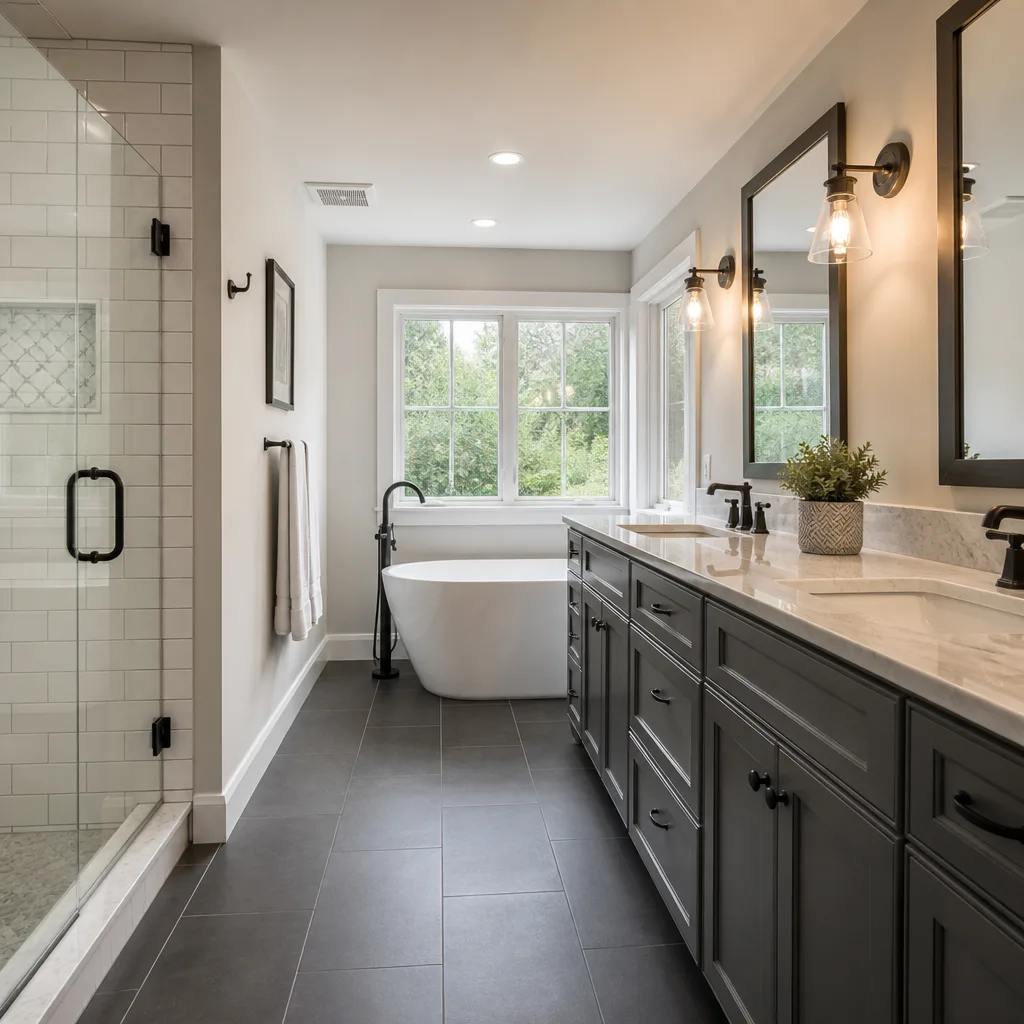
James Hardie bathroom remodeling in West Palm Beach typically runs $9,000-$28,000 installed, depending on square footage and whether we’re working with HardieBacker cement board, HardiePanel vertical siding, or full HardieZone system integration. We stock James Hardie-compatible substrate and finish materials, and most bathroom remodels using Hardie products start within two weeks of written quote acceptance. Homeowners usually discover an issue when cement board under tile begins to crumble at fastener points, or when they peel back failing caulk near a tub surround and find the HardieBacker has wicked moisture past its intended limit - common in Florida’s high-humidity bathrooms where exhaust fans are undersized or ducted into attics rather than outside.
Which James Hardie Products This Applies To
We work with three James Hardie product families in West Palm Beach bathrooms: HardieBacker 500 cement board (the 1/2″ and 1/4″ thicknesses), HardieBacker ProGrid with its molded fastener pattern, and HardiePanel vertical siding when it’s used as wainscoting or full wall cladding in moisture-prone spaces. The critical compatibility gotcha is fastener type - HardieBacker 500 requires corrosion-resistant cement board screws with a minimum 1-1/4″ embedment into framing, not drywall screws, which is where we find most DIY and even some contractor failures in homes near the Intracoastal where salt air accelerates corrosion.
To identify what you have, check the stamp on the board face (HardieBacker 500 has a smooth side and a textured side with “James Hardie” printed in ink) or the fastener pattern (ProGrid shows a dot grid molded into the surface). For OEM versus aftermarket substrate decisions, we specify James Hardie cement board for wet-area walls because its Portland cement, sand, and cellulose composition hits 0.50 perms water vapor permeance - aftermarket fiber-cement boards often run higher permeance or lower compressive strength, which matters when you’re setting 12×24 porcelain with a 1/3 offset pattern that concentrates stress at the board surface.
Signs Your James Hardie Bathroom Installation Is Failing
- Crumbled or punky board at fastener locations. The cement board has absorbed moisture past its design limit, usually because standard drywall screws were used instead of cement board screws with a wafer head. In West Palm Beach, we see this accelerated by bathrooms vented into attic spaces where humidity never drops below 70%.
- Tile cracking in a straight line following a HardieBacker seam. The seam wasn’t taped with alkali-resistant fiberglass mesh and thinset before tile went down, so differential movement between boards telegraphed through the tile layer. We find this in 1980s-era homes in the El Cid and Flamingo Park areas where original bathrooms were updated piecemeal.
- Soft, discolored areas near tub or shower thresholds. HardieBacker is not waterproof - it’s water-resistant - and without a proper liquid membrane or sheet membrane applied over it, standing water at curbs and thresholds degrades the cellulose content. This is the failure mode we document most often in second-story bathrooms where drain pan slope was insufficient.
- Visible mold on the board surface before tile installation. The bathroom was used during a prolonged renovation, or the board was stored on-site during our summer rainy season without adequate coverage. Once mold penetrates cement board, remediation requires removal; surface cleaning won’t reach the hyphae.
- Fasteners backing out or “popping” tile. The wrong fastener schedule was used - HardieBacker 500 requires 8″ on-center at perimeters and 12″ in the field - or the framing behind has swollen from moisture, pushing the fastener head outward. We check this with a stud finder and moisture meter before quoting any repair.
BeforeAfterReplacement Cost & What’s Included
| Component | West Palm Beach Price Range |
|---|---|
| Full bathroom remodel with HardieBacker wet walls | $9,000 - $28,000 |
| Small bathroom remodel (powder room, guest bath) | $5,000 - $12,000 |
| Shower surround replacement with new HardieBacker substrate | $3,000 - $8,500 |
| Tub-to-shower conversion with full HardieBacker walls | $3,500 - $10,000 |
| Walk-in shower installation with HardieBacker + liquid membrane | $4,500 - $12,000 |
The range driver is always scope and access. A second-story bathroom in a 1950s West Palm Beach ranch with original cast iron plumbing costs more than a ground-floor replacement in a newer build because we’re cutting out old board, potentially sistering water-damaged framing, and running new exhaust ducting through a hot attic. Under Clause 1 of the Haven Standard, your written quote itemizes substrate, membrane, tile labor, and fixture rough-in separately - no lump-sum mystery. The 365-Day Done Right Promise covers our installation and workmanship; material defects fall to James Hardie’s own product warranty, which we help document if a claim arises.
DIY or Call Us?
There’s honest work a homeowner can do: verify your exhaust fan moves air (hold a tissue to the grille - it should pull flat), check that your bathroom door has a 3/4″ undercut for makeup air, and confirm your HardieBacker stamp matches your project records. Where DIY goes wrong is the sequence - cement board before membrane, proper fastener embedment without overdriving, and the critical detail of sealing penetrations with compatible sealant before tile sets.
We don’t recommend homeowners remove existing cement board in bathrooms built before 1985 without testing for asbestos-containing materials first. And any work involving electrical relocation near water sources - GFI protection, exhaust fan circuits, heated floor leads - requires a licensed electrician per Florida building code. If you’re seeing the symptoms above, call (561) 475-3903 and we’ll schedule a site visit with documented photos, a moisture reading, and a written price before any work starts.
FAQs
Properly installed HardieBacker with adequate ventilation and a complete waterproofing membrane lasts 25-40 years. In West Palm Beach, the limiting factor is usually not the board itself but the exhaust system - fans ducted into attics rather than through the roof or soffit allow humidity to cycle back, and we see meaningful degradation at 15-20 years in those homes. Call (561) 475-3903 for an assessment of your specific setup - estimates are free.
Spot repair is possible for isolated fastener blowouts or small crushed areas, but we don’t recommend it for moisture-damaged board because cement board doesn’t dry to its original structural state - the cellulose swells and the Portland cement matrix cracks internally. For anything larger than a 4″ x 4″ area, full panel replacement gives a substrate you can warranty. Call (561) 475-3903 and we’ll show you the damage on camera before quoting.
Removal of old substrate, framing inspection, new HardieBacker installation with proper fastening and seam treatment, plus membrane application, takes 2-3 days for a standard tub surround and 3-5 days for a full bathroom with separate shower. Tile setting and grouting add another 3-4 days. We don’t rush the cure times - thinset and membrane manufacturers specify 24-hour minimums that we document in the photo record. Call (561) 475-3903 to schedule.
We maintain HardieBacker 500 in both thicknesses, HardieBacker ProGrid, and the full fastener and seam-tape system on our regular material runs - not sitting on a truck baking in the sun, but available through our West Palm Beach supply chain with 24-48 hour pull. For HardiePanel or custom HardieColorPlus finishes, we order to your selection and confirm delivery date in writing before scheduling crew arrival. Call (561) 475-3903 to confirm current stock for your project.
Rowan Construction Group West Palm Beach is an independent contractor and is not affiliated with James Hardie Building Products. We also stock and install materials from KraftMaid, Cambria, and Silestone where those products better serve a project’s requirements.
Written by Grant Rowan, Owner, Rowan Construction Group West Palm Beach at Rowan Construction Group West Palm Beach, serving West Palm Beach and nearby areas.